 Worldwide Presence

Risk-free practice for pediatric critical care
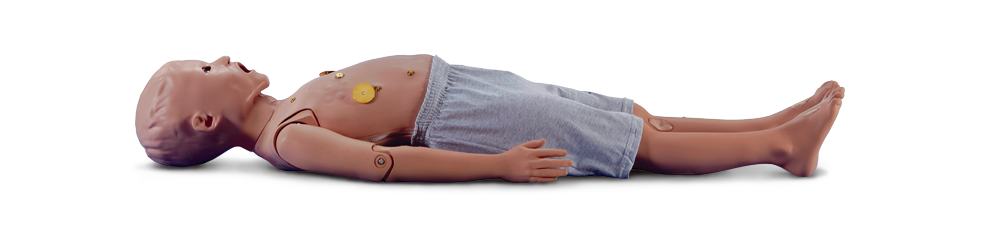
A reproduction of a six-year-old child, PediaSIM supports a wide range of clinical interventions and offers risk-free practice for pediatric clinical care. PediaSIM offers the integrated METI physiology in a smaller practice patient with full trauma features for both nursing and emergency response.
“The physiology of the pediatric simulator plays a definitive part in the students’ assimilation of the physiological changes in order for them to think critically in providing the care needed for their pediatric clients.”
- Joy Thomason, RN, MSN, Assistant Professor at the Union University School of Nursing in Jackson, Tennessee
Child-sized anatomical features
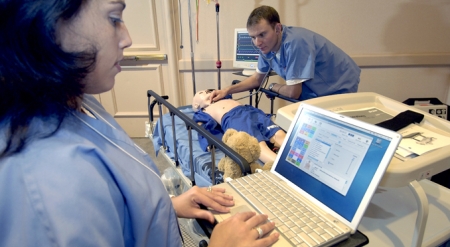
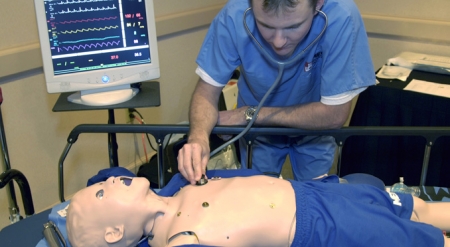
PediaSIM’s anatomical features include responsive pupils, an articulated mandible, exhalation of air and CO2 and secretions from the eyes, ears and mouth. PediaSIM responds to clinical interventions including chest compression, pacing, defibrillation, needle decompression and chest tube insertion.
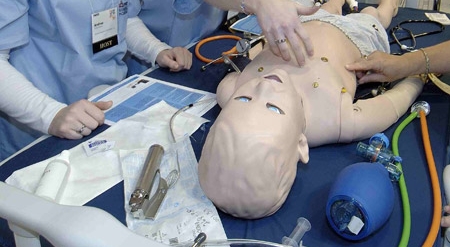
The PediaSIM’s airway management features enable learners to practice airway management in a safe environment. Airway trauma features include upper airway obstruction, laryngospasm and bronchial occlusion for practice of esophageal, nasal and oral intubation, BVM ventilation and needle cricothyrotomy.
PediaSIM Curriculum
The CAE Healthcare Academy has developed a Pediatric Advanced Life Support (PALS) learning application that is aligned with AHA 2010 guidelines as well as a Pediatric Emergencies learning module.
Each learning module contains evidence-based training scenarios designed to immerse learners in a clinical environment. The scenarios include learning objectives, facilitator’s notes, equipment and supply lists and software application.
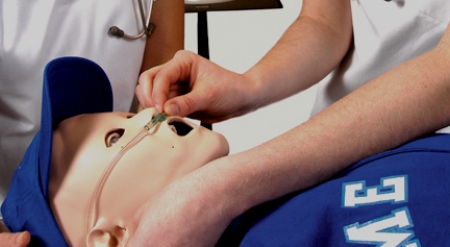
PediaSIM HPS
PediaSIM HPS is specifically designed for risk-free practice of anesthesia, respiratory and critical care. With true respiratory gas exchange, PediaSIM HPS inhales oxygen and exhales CO2, interfaces with real clinical monitors and responds to oxygen therapy. The optional anesthesia delivery system allows the lungs to uptake or excrete nitrous oxide, sevoflurane, isoflurane and other anesthetic gases. PediaSIM HPS also responds to drug administration with a unique Drug Recognition System that uses barcode technology. New Simulated Clinical Experiences (SCEs) are now available for anesthesia, allied health, Pediatric Advanced Life Support (PALS) and PALS Europe.
Easy Operation with Müse Interface
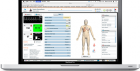
Operating PediaSIM is simple with the standard Müse interface. The dashboard features a patient image, conditions and medications, streaming data from clinical monitors, a menu of Simulated Clinical Experiences (SCEs) and a timeline. The PediaSIM’s physiology and SCE can be preset so an instructor can focus on teaching.


