 Présence mondiale

Cinq pratiques exemplaires du monde de l’aviation qui feront décoller votre centre de simulation
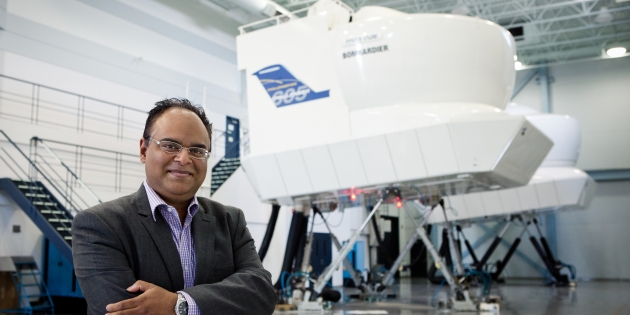
An interview with Robert Nag, Center Leader at the University of Montreal Healthcare Training Center
Robert Nag has more than 20 years of successful leadership experience in the aviation training and flight simulation industry. Nag started his career at CAE Inc. in 1993 as a visual database engineer. He has effectively managed various aviation training programs including the Bombardier Aircraft Training Center, where he has overseen technical training since 2005.The aviation executive reveals the following best practices to improve learning in healthcare simulation programs.
Establishing the fundamentals: Whether it’s airports or hospitals, educators need to lay the groundwork for their operation by establishing some of the fundamentals that allow training to operate smoothly. These factors include organizing schedule shifts for personnel, students and instructors, developing and managing the logistics of simulation sessions, preparing and organizing rooms and equipment prior to simulation, and developing programs that realistically teach students how to handle issues so they are better prepared for them in real-life scenarios.
Briefing: The concept of courseware and self-study is an important step in aviation before stepping behind a simulator, Nag says. At the Bombardier and CAE Training Centers, students are utilizing online courseware (CBT, or computer-based training) that allows them to complete skills assessments and exams prior to coming to the simulation site. The time spent with the courseware allows instructors to assess students’ skills and knowledge as well as build on those skills with simulation.
“We’re doing this in aviation to build a good foundation for simulation,” Nag says. “And we would like to transfer the concept of a Learning Management System (LMS) to the University of Montreal Healthcare Learning Center, as well as others that are to come. This could be a very realistic and helpful model for passing competencies and learning objectives.”
Debriefing: “For sure, we’re transposing the art of briefing and debriefing, that’s something we do very well in aviation,” Nag says. “When you have simulation that’s recorded by audiovisual systems, it has great potential to improve the training and education. If we can set the markers correctly, we can use that footage to do on-the-spot debriefing and include evidence-based training in future lesson plans.” Debriefing sessions, Nag says, allows instructors to better assess the learning outcomes and provide valuable feedback for the students. These debriefing sessions can include a mix of recorded video, grade sheets and checklists so instructors can focus on advancing performance feedback.
Crew Resource Management training: In aviation, CRM training focuses heavily on the scenario. “In aerospace, it’s all about the script or lesson plan,” Nag says. “We have intense training about communication and protocol, and this is centered around responses given around real-time drama, ‘what would happen if’ situations.” With that, Nag says it’s important for healthcare to build scenarios that are creative and that emphasize the clinical skills and communication skills that need to be perfected. “The manikin or simulator is there to serve us, but there’s a learning strategy that needs to take place behind the manikin,” Nag says. “At the end of the day if the script doesn’t call up half the features in the manikin then it’s not going to be as effective. What is important is that we focus on the learning needs and objectives, and the simulator is another tool that we can use to significantly increase the realism and drive home the competencies.”
Measuring feedback: “One area that is strong in aviation training is feedback,” Nag says. “We survey our clients and the trainees to better our approach to training.” Healthcare training programs, Nag suggests, stand to benefit from the data they collect from students and/or clients who utilize their facilities and programs. Nag recommends that simulation centers maintain a database of feedback as a mechanism for measuring what’s most effective when it comes to training methods, scenarios, and simulation equipment. Nag adds, “Since we are at the pioneering days of healthcare simulation services, we have an opportunity to measure at the ground level where we are, and to objectively assess the learning progress and effectiveness of the simulation itself.”