 Présence mondiale

Trois éléments clés pour présenter un compte-rendu positif en matière de simulation
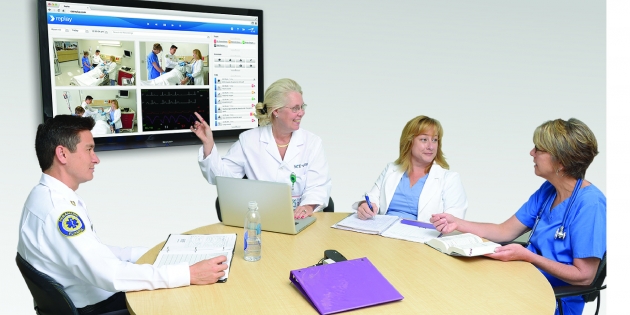
The pivotal purpose of a post-simulation event debrief is to move toward assimilation and accommodation in order to transfer learning to future situations. (Johnson-Russell & Bailey, 2010; NLN-SIRC, 2010)
Experiential-based learning (“learning by doing”) is the foundation of healthcare simulation instruction. Hands-on training that utilizes patient simulators and programmed scenarios has proven highly effective in solidifying procedural competency and the critical thinking skills necessary in real-life situations.
But in order for meaningful learning to take hold, a healthcare simulation debrief must follow the training event. Self-reflection, instructor-led inquiry, and audiovisual-assisted analysis are three key elements that make up a positive simulation debrief. Learn and master the three crucial elements of a positive simulation debrief and watch for the “aha moment” on the faces of your learners.
The three elements of a positive simulation debrief:
1. REFLECTION
The act of reflection is “the conscious consideration of the meaning and implication of an action.” Within the context of the simulation debrief, constructive reflection requires more than just an overview of the events that took place, but also an internally driven assessment of how judgment and behavior were influenced by emotions, perception, presumptions and responses to stress. This kind of whole being/self-reflection establishes a valuable knowledge base from which the learner can draw throughout his/her professional life.
2. GUIDED QUESTIONING
The reflection phase of a healthcare simulation debrief succeeds when the learner develops deep understanding into why he/she performed in a particular way, what went well and what could have or should have been done differently. Guided questioning by a capable instructor (or, debriefer), who will lead gently and constructively, is pivotal for this self-awareness to take place. Within a non-threatening and supportive environment, learners explore their actions, feelings, and thinking processes. Instructor-led inquiry enables them to share knowledge, address mistakes, and gain insights into areas where improvements can be made.
3. AUDIOVISUAL ASSISTED DEBRIEFING
Audiovisual systems allow learners to revisit the simulation scenario so they can see the event first-hand, exactly as it happened. Some of the most beneficial aspects of an audiovisual assisted debriefing include the ability to:
• enhance reflection and learning by providing a platform for objective group feedback
• identify specific simulation activities by frame, segment, room, timestamp, learner, patient, physiological data, etc.
• facilitate post-scenario assessment with detailed moment-by-moment views
• effortlessly record, document and archive volumes of audiovisual data for future reference and training.
CAE Healthcare delivers medical simulation and debriefing solutions to help improve learning, and ultimately, patient safety and outcomes. Our Replay system is ideal for instructor-led debriefs. Web-based, scalable from 2 to 200 cameras and so easy to use, Replay captures all simulation activity so instructors and learners can pinpoint errors and make behavioral adjustments.
Discover more about the CAE Replay audiovisual system and never miss a moment for debrief.
Like what you just read? Subscribe to the CAE Healthcare blog to receive more articles like this.
Citations
Akhu-Zaheya, L. M., Gharaibeh, M. K., & Alostaz, Z. M. (2012, Month). Effectiveness of simulation on knowledge acquisition, knowledge retention, and self-efficacy of nursing students. Clinical Simulation in Nursing, Vol(X), XXX-XXX. doi:10.1016/j.ecns.2012.05.001.
Aldridge, Matthew, and Stephen Wanless, eds. Developing Healthcare Skills Through Simulation. SAGE, 2012.
Decker, Sharon, RN, PhD., ACNS-BS, CCRN, ANEF. “The Role of Debriefing and Guided Reflection in Simulation” Texas Tech University Health Sciences Center, School of Nursing
Shinnick, M., et.al. (2010a) Debriefing: The most important component in simulation? (abstract). Paper presented at the Internal Meeting on Simulation in Healthcare Meeting, January 23-26, 2010, Phoenix Arizona (accessed 8/2014)