Worldwide Presence

Watching her grandchild at play, Angela Hope, senior lecturer and practice and skills coordinator for the University of Huddersfield’s School of Human and Health Sciences, was struck by how much we humans learn through play. “Children practice simulation when they play and then they learn to socialize around that,” Hope says. “Our nursing students often say that learning through simulation is simply fun. We have actually published articles about this.”
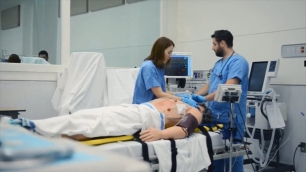
About 200 miles north of London, the university enrolls roughly 270 nursing students a year in a three-year course of study. The course’s growth of simulator use in the last five years has led to the development of a complete Simulation Suite that encompasses the first floor of a large building.


Inclusive in the suite housing an iStan and PediaSIM, are rooms for nursing fundamentals, critical care, occupational therapy, physiotherapy, pediatrics, midwifery studies and an operating theater. “The simulators have truly emerged as a critical teaching tool and are fully integrated into our curriculum,” Hope notes. “Simulation is a tool that is taking education and learning to such a fantastic level. There really is no limit to the possibilities.”