 Worldwide Presence

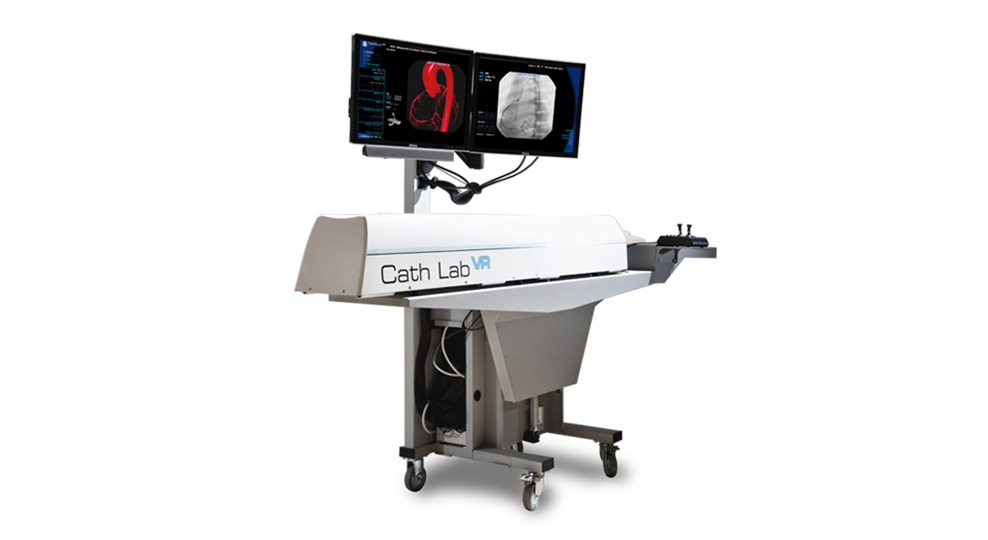


Risk-Free Practice of Cardiac and Peripheral Vascular Procedures
CathLabVR offers true-to-life tactile sensations of the forces encountered when manipulating wires, catheters, balloons and stents within a patient. Learners are able to practice accessing and navigating diverse anatomies with cardiac and vascular abnormalities. The repetitive practice and challenging cases allow learners to develop skills and confidence in a risk-free environment.
“The feel of the simulator, the mechanics of it, are really good. The tactile feel is reminiscent of what really happens in patients. The link between the technical steps and what you see on the screen is quite realistic. A third point would be that the scenarios represent everyday mainstream events.”
- Dr. Campbell Rogers
Director, Cardiac Catheterization Laboratory, Brigham & Women’s Hospital
“Those who train with this medical simulator achieve better performance, take less time to complete a procedure, and require fewer procedures to reach competency than those trained under the historical mentoring method.”
- Dr. Alan Yeung
Chief, Division of Cardiovascular Medicine, Director, Interventional Cardiology, Stanford University School of Medicine

Created for curriculum building
The curriculum covers a range of anatomies and procedures, from single or multiple-vessel coronary disease to aortic valve replacement. The cases include 30 basic and advanced percutaneous coronary and periphery interventions, native and bioprosthetic cardiac valve replacements and cardiac rhythm management.
Evidence-based assessment and debriefing
Administrators may easily customize case parameters to match each learner’s performance level. At the conclusion of each case, learners are debriefed with evidence-based metrics and outcome measurements. The recorded metrics and post-case debriefing provide analytical feedback for continuous trainee development.


