A recent academic study 1 published in the Iowa Orthopaedic Journal, compared three virtual reality arthroscopic simulators (each possessing various training modules for practice in specific simulated arthroscopic procedures). No previous study encompassing a three-way, head-to-head VR simulator trial using previously established metrics had ever been conducted before.
Test subjects (nearly a quarter of whom had expert level/extensive arthroscopic experience) completed a "previously validated simulator questionnaire for face validity" at the conclusion of training. Only one VR simulator received the highest overall face validity of the three.
That simulator was the VirtaMed ArthroS. 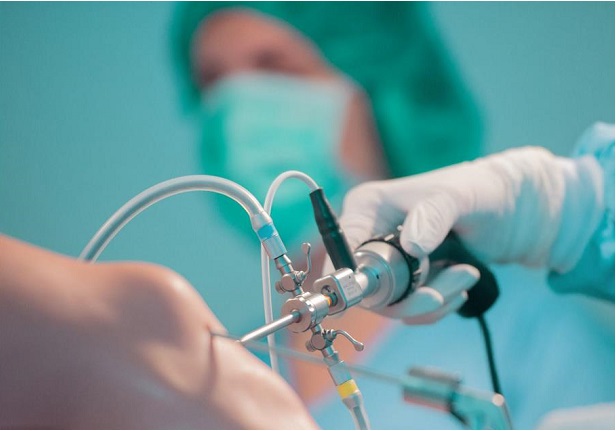
Superior Face Validity of the ArthroS™
The ultimate aim of the study was to "assist orthopedic educators in making evidence-based decisions in regards to VR simulation."
The four variables that comprised face validity in this study were:
1. Outer Appearance
2. Intraarticular Appearance
3. Instrument Appearance
4. User Friendliness
Face validity evaluation gives learning institutions potentially a more comprehensive foundation on which to base their assessments of the arthroscopic simulator that might best fit their program needs.
...the simulator with the highest overall face validity will give residents the optimal arthroscopic training experience.
The results of the study demonstrated that the VirtaMed ArthroS had the highest overall face validity of the currently-available group of arthroscopic VR simulators.
The American Board of Orthopaedic Surgery (ABOS) Skills Training Mandate
VR Surgical Simulation Can Significantly Improve OR Performance
The use of simulation as part of an intensive surgical skills program can be an effective way for junior orthopedic trainees to quickly attain the basic technical skills specific to orthopedic surgery. Simulation-based training can cause a ‘right-shift’ along the learning curve for more efficient training with real-world improvements in operative procedures.2
The VirtaMed ArthroS provides orthropedic surgeons with the most advanced and comprehensive training system available for diagnostic and therapeutic arthroscopy.
With the ArthroS virtual reality surgical simulator, learners receive training in high fidelity case simulations that provide them with realisitic, hands-on experience in core procedural techniques, diagnostic interventions, and operative arthroscopy.
Get the most realistic, and highly validated, surgical simulator for arthroscopy education.
Sources:
1 Martin KD, et al., Comparison of Three Virtual Reality Arthroscopic Simulators as Part of an Orthopedic Residency Educational Curriculum. Iowa Orthop J. 2016; 36: 20–25.
2Seymour NE, Gallagher AG, Roman SA, et al. Virtual Reality Training Improves Operating Room Performance: Results of a Randomized, Double-Blinded Study. Annals of Surgery. 2002;236(4):458-464.
 Worldwide Presence