 Worldwide Presence

The 4 Rs of Simulation Debriefs: Recollection, Reflection, Review, and Replay
Post-simulation debriefings are essential to learning.
Though every debrief presents a unique opportunity for a “purposeful, structured period of reflection, discussion, and feedback …” (Riley, p.155), all simulation debriefs share certain fundamentals which have been proven to help students review, correct, and learn from their simulation experiences. Most do this through non-judgmental discussion, complemented with video-supported debriefing.
Four fundamental "Rs" of a simulation debrief are noted below.*
Recollection
Recollection grants the learner an opportunity to recall the simulation experience as he/she initially remembers it. The primary focus is on the recollection of factual events as opposed to personal opinions, with an emphasis on objectivity.
Reflection
During reflection, students explore the simulation experience from the inside out. That is, with gentle guidance from the instructor, each learner gets to express his/her subjective reactions while dialoguing with, listening to and learning from the group.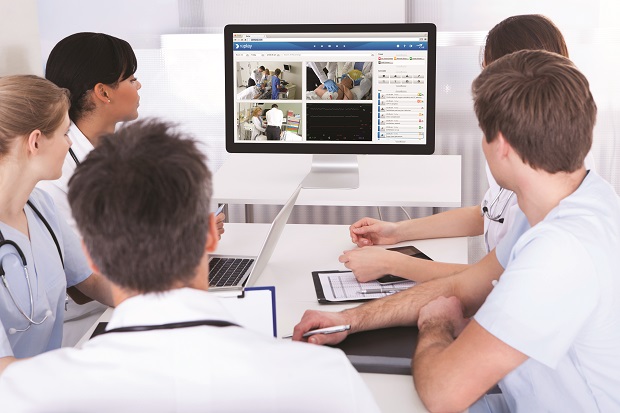
Review
The review portion of a debrief is often centered on uncovering the motives behind actions, behaviors, and decisions. The instructor may ask increasingly investigative questions for deeper assessment. If an audiovisual recording system has captured the simulation scenario, the oral review might evolve into a learning intensive, video-supported debriefing session.
Replay
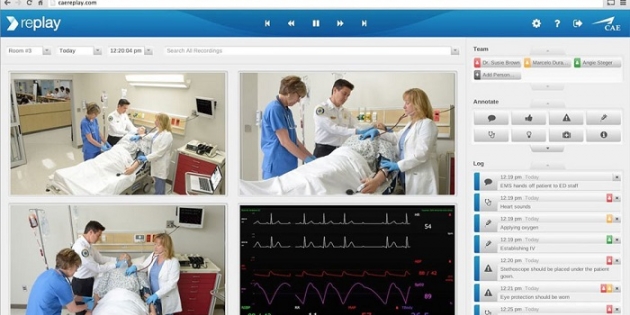
When a post-simulation debriefing is augmented with audio and video playback (such as CAE Healthcare's Replay system), learners obtain a different perspective on their experience.
Replay is a simulation audiovisual recording system that captures every moment of a simulation. It provides instructors and learners alike with documentation of how they actually performed – and not how they thought they did.
CAE Replay’s simulation capture system saves time by allowing instructors to focus on the content they want to discuss. Nothing gets lost (CAE Replay records, saves, and structures content into searchable/retrievable chapters) and every instant becomes a teachable moment.
Ultimately, the goal of debriefing is to engage in conversations where understanding and transformative learning happens. CAE Replay allows simulation debriefings to be conducted the way they were meant to be.
What kind of limitations are you experiencing with your current simulation audiovisual recording system?
Contact us to learn how to increase the effectiveness of your debriefs with CAE Replay and learn about our upcoming webinars!
Visit the CAE Replay website for additional information
Subscribe to the CAE Healthcare Blog for more updates like this



*Note: Every debriefing is unique and might require customization to suit individual learning objectives. The information supplied here is for general information purposes only and is not intended as a definitive guideline for all simulation debriefs.
Sources:
Riley, Richard H (2008). Manual of simulation in healthcare. Oxford New York Oxford University Press
Rudolph, Jenny (2007), Debriefing with Good Judgment, Anesthesiology Clin 25: 361-76.
4 Rs .. great stuff!
Thank you for clearly explaining this.