 Worldwide Presence

TeamSTEPPS Glossary 4: Obstacles & Effective Team Performance
Humans make errors. This is a given. But when lives are on the line, medical teams must be constantly on the alert for behaviors that may interfere with patient safety. This fourth installment within CAE Healthcare's TeamSTEPPS glossary series addresses potential obstacles to effective team performance.




Team Strategies and Tools to Enhance Performance and Patient Safety (TeamSTEPPS) focuses on team-based communication dynamics and strategies to improve the quality, safety and efficiency of patient care. Becoming familiar with certain types of behaviors, behaviors which might imperil patient safety, is one way to ensure they won't.
The following list represents just a few of these potential obstacles.
TeamSTEPPS Glossary (Part 4 )
-
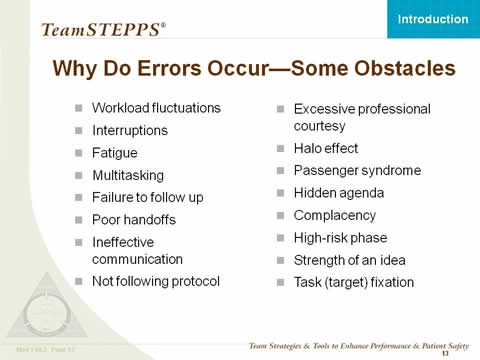
Complacency - Challenges keep teams sharp and on their toes. When complacency sets in, and team members become comfortable with doing things the same way without an eye for innovation or improvement, cognitive dullness may result. A lazy mind can be a patient safety hazard.
-
Excessive Professional Courtesy - Rank deserves respect, however, too much deference may interfere with the level of healthcare provided. If members shy away from raising necessary objections, asking questions, or discussing deficiencies in performance, team effectiveness can suffer.
-
Halo Effect - Going hand-in-hand with excessive courtesy, too much reverence could adversely affect team performance. No one is infallible, regardless of reputation or position of authority. Any behavior that brings about hesitancy or fear among team members can pose a detriment to teamwork.
-
Hidden Agenda -Transparency of decisions and clearly-defined intentions are vital in team-based communications. When a team member takes actions based on information that is not conveyed to other members of the team, it may pose a risk to patient safety and to team effectiveness.
- Passenger Syndrome - Abdicating one's responsibility for patient care simply because someone else is in charge is unacceptable. All team members must understand their roles and be accountable for their actions. No one in a medical team can claim to just being along for the ride.
Like what you're reading? Click here to subscribe to this blog!
Avoiding Obstacles to Medical Team Effectiveness
Delivering quality healthcare takes much vigilance and diligence. It also requires a concerted team effort. This includes the practice of open communication, a willingness to discuss safety procedures, and honestly identifying errors, or faulty processes, when they are evident.
Studies have shown that setting team goals is a useful method for directing the energies of individuals towards achieving their shared objectives. This, along with proper debriefing after stressful events (such as an intensive simulation training session) can be immensely helpful in ensuring effective team performance and avoiding obstacles to favorable patient outcomes.
Click below for more in the informative series:
TeamSTEPPS Glossary 1
TeamSTEPPS Glossary 2
TeamSTEPPS Glossary 3
What topics in healthcare simulation and training are you most interested in? Drop us a line!