Birth defects continue to afflict populations worldwide. This year, a network of international organizations launched the first annual World Birth Defects Day to bring attention to the need for prevention, screening, and early diagnosis of birth defects.
Clinicians who are proficient and skilled in OB/GYN ultrasound procedures, such as nuchal translucency, may be able to offer an expectant mother early and critical assessments on the health of her unborn child.
It is a commonly accepted practice to perform an initial ultrasound for nuchal translucency (NT) during the first trimester of pregnancy.
NT screens are minimally-invasive and measure the nuchal fold thickness (NFT) at the base of the fetal neck. This risk-assessment scan provides a signficant opportunity for the early detection of congenital and chromosomal anomalities in the fetus (Down syndrome, being a major one). Information gained from these screens are often used to assist in maternity management, helping families as they prepare for any subsequent decisions they may need to make.
Obtaining critical, accurate test results requires clinical proficiency, technical precision and expert training on the part of the ultrasonographer. Skills practice in NT measurement screening may be adequately facilitated by simulation-based learning tools. Studies have shown* that simulation training on equipment that provides high quality, high reliability, and high fidelity can successfully lead to operator competency and clinical proficiency.
Potential Benefits of Simulation Training in Obstetrical Ultrasound
New practicioners of ultrasound procedures may, at first, exhibit 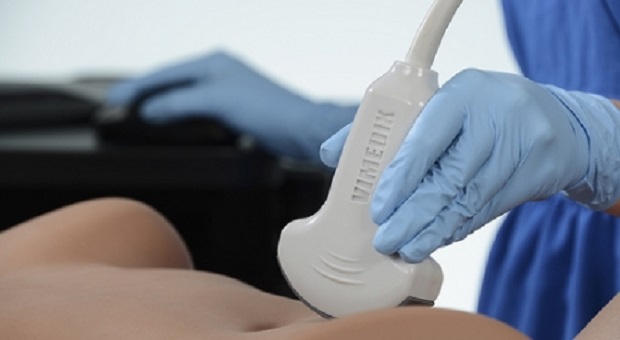 varying degrees of awkwardness. In the case of a transvaginal, transabdominal or endovaginal examination, it is most important that not only the patient be at complete ease, but that the ultrasound operator demonstrate mastery and comfort with the procedure as well.
Ultrasound simulation-based training offers learners the chance to practice skills under realistic conditions. They may train on the same procedure over and over, or advance to more difficult cases, until acceptable levels of satifisfaction and confidence are achieved.
Vimedix OB/GYN Utrasound Simulator for Realistic Training
The Vimedix OB/GYN Ultrasound Simulator accelerates training for obstetrical and gynecological (OB/GYN) physicians and sonographers in several ways. For one, it captures real-time ultrasound images alongside the corresponding anatomy, which is rendered by visual artists in vivid 3D.
Other features of the Vimedix OB/GYN simulator:
The Vimedix OB/GYN ultrasound simulator is aligned with guidelines from the International Society of Ultrasound in Obstetrics and Gynecology (ISUOG) and the American Congress of Obstetricians and Gynecologists (ACOG) for sonography fetal assessment. Users can obtain the same procedural realism that clinicians may experience in an actual medical environment.
This means that prior to encountering a live patient, ultrasound learners may obtain proficiency in a range of obstetrical scenarios and pathologies -- without jeopardizing the health of the fetus or expectant mother.
Click to learn more about the Vimedix OB/GYN ultrasound simulator
Take a look at our updated, interactive Product Catalog!
What are your thoughts on training in obstetrics and gynecological procedures on this simulator?
Submit your comment below.
Share this Page on Social Networks!




*Studies/Sources:
Smith D. First-Trimester Nuchal Translucency Screening to Detect Down Syndrome. Newborn and Infant Nursing Reviews. (2008) Accessed Feb. 11, 2015
Ahmad R, et.al., Impact of High-Fidelity Transvaginal Ultrasound Simulation for Radiology on Residents' Performance and Satisfaction. Academic Radiology (2015); Accessed Feb. 9, 2015
Saucedo, MC, et.al., Measurement of Nuchal Translucency and the Prenatal Diagnosis of Down Syndrome. Obstetrical Gynecology (2009) Accessed Feb. 9, 2015
 Worldwide Presence