Heading back to school or need to refresh your maternity care skills? Midwives who return to school can look forward to a brand new world of learning that can strengthen their professional skills. And, the Lucina Maternal Fetal Patient Simulator can help them succeed.
The International Confederation of Midwives (ICM)*, an accredited non-governmental organization that "supports, represents and works to strengthen professional associations of midwives throughout the world" has constructed what it calls The Three Pillars of a strong midwifery profession. They are:
Relative to education and training, nurse practitioners and others involved in maternity care, labor, childbirth, and delivery, were handed an education benchmark by the Institute of Medicine (IOM) in 2010.
This meeting culminated in calling for 80% of the American nursing workforce to have, at minimum, a bachelor of science degree in nursing (BSN) by the year 2020.
And, while the IOM has not explicitly mandated training requirements for the field of midwifery, most nursing school programs in the United States require midwife candidates to be in possession of a registered nurse degree (RN) before they can become practicing midwives, while other credentialing organizations insist on a BSN.
Regardless of whether the credential achieved is a BSN, a CNM (certified nurse-midwife), or a CM (certified midwife), a standard of professional competency is crucial for maternity nursing practitioners. And, going ‘back-to-school’ and obtaining additional training on a high fidelity maternal fetal simulator can help accomplish this goal.
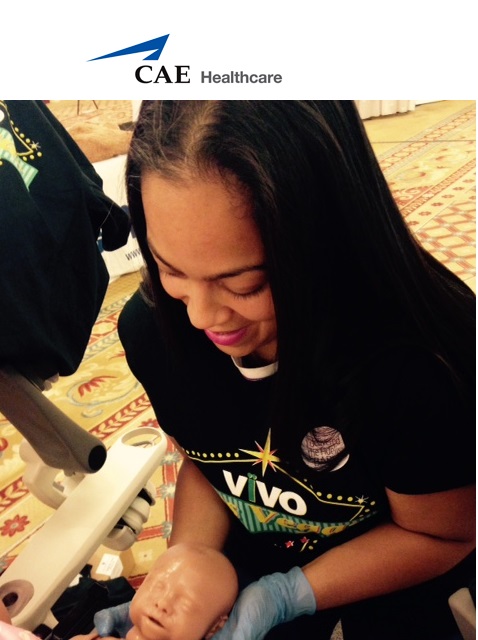
Another successful birth at the National League for Nursing Educational Summit 2015 in Vegas this week, thanks to CAE Healthcare's Lucina Maternal Fetal Patient Simulator .. #NLNSummit2015
Posted by CAE Healthcare on FACEBOOK, on Friday, October 2, 2015
Superior Delivery Training with CAE Fidelis™ Lucina
CAE Healthcare unveiled the Fidelis Lucina maternal fetal childbirth simulator in 2014.
With superior physiology and birthing capabilities, Lucina gives learners the opportunity to realistically train on various delivery maneuvers for all stages of labor and delivery. Midwives, OB/GYNs, and maternity nurses can practice critical thinking and crisis intervention skills with no maternal-fetal risk.
This wireless female patient simulator comes standard with ten clinical experiences (SCEs), including:
The midwife profession is steadily gaining in acceptance as a viable and safe alternative to traditional maternal care, especially for low to mid risks pregnancies. Acceptance is bound to increase, as will the demand for global standards of excellence and critical maternity nursing skills training.
Subscribe and receive updates on more articles like this.
Practice routine deliveries and maternal emergencies with the Fidelis™Lucina childbirth simulator.
From the website:
The International Confederation of Midwives is an accredited non-governmental organisation and represents midwives and midwifery to organisations worldwide to achieve common goals in the care of mothers and newborns. These organisations include the WHO and other UN Agencies, global professional health care organisations including the International Federation of Gynaecology and Obstetrics (FIGO), the International Paediatric Association (IPA), the International Council of Nurses (ICN), non-governmental organisations, bilateral and civil society groups.
Sources:
Smith, R., Gray, J., Raymond, J., Catling-Paull, C., & Homer, C. S.E. (2011, Month). Simulated learning activities: Improving midwifery students’ understanding of reflective practice. Clinical Simulation in Nursing, Vol(X), xxx-xxx. doi:10.1016/j.ecns.2011.04.007
 Worldwide Presence