 Worldwide Presence

Have Simulators, Will Travel: South Dakota Takes Training on the Road
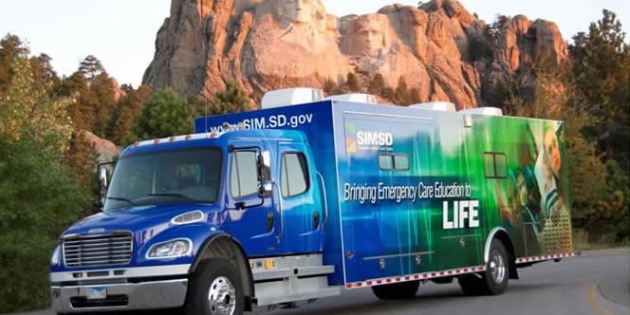
Simulation in Motion-South Dakota has developed a sustainable, statewide system that consistently provides access to advanced, high-fidelity patient simulator training , enhancing the delivery of emergency patient care in rural / frontier South Dakota. Continue reading to learn more.
Finding itself in need of a way to provide medical training to its rural, remote area-based EMTs, paramedics and first responders, the South Dakota Department of Health developed a mobile, simulation-based healthcare training program in the mid-2000's. The program has continued to be a success throughout the years. So much so, that other states are now in line to follow South Dakota's lead and implement necessary steps to create their own mobile healthcare simulation training units.
Delivering Hands-on Simulation-Based Training Where It's Needed
Simulation in Motion–South Dakota (or, SIM–SD), was initially developed to "provide statewide emergency care outreach training for pre-hospital and hospital personnel". The program has grown to include local EMS, EMT and certified first responders. SIM-SD uses custom-made mobile simulation labs to provide hands-on, simulation-based medical training to five of the region's healthcare sites, including three emergency medical service agencies.
High-fidelity patient manikins enable SIM-SD to deliver healthcare education where and when needed. These simulators respond realistically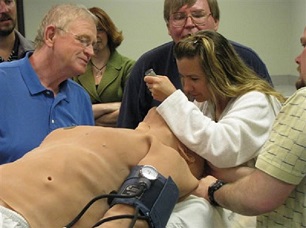 to medical treatment and procedures: They cry, breathe, talk, react to medicines and, in some cases, they "die." But, unlike humans, they come back to life again and again, granting South Dakota medical personnel the opportunity to practice their skills repeatedly in a low-stress environment.
With just three patient simulator manikins currently at its disposal - iStan™ adult, PediaSim™ child and BabySim™ for infant training, all from CAE Healthcare - SIM-SD is able to fulfill the South Dakota Department of Health's mandate for the program, most notably
- To ensure quality healthcare for all South Dakotans;
- To provide access to technologically advanced training that would enhance the delivery of emergency patient care in rural/frontier South Dakota;
- To provide increased educational outreach opportunities for emergency care personnel in rural communities;
- To enhance competence and confidence among rural emergency care
And, because "most rural EMS workers only come across a critically ill or injured patient [only] a few times per year", simulation training offers emergency response personnel the valuable opportunity to maintain their skills and to experience critical care scenarios with high-fidelity patient manikins.
For more on this incredible story, read the complete, online article from the Journal of Emergency Medical Services
Do you think using mobile transport for training in simulation is a good idea? Share your comments with us below, or post on social media!
Find out how to implement simulation-based healthcare training in your medical training program!
Contact a CAE Healthcare representative today.
Get Social with CAE Healthcare



Click Below and Become a Subscriber!