Worldwide Presence

4 Practical Tips for Choosing an Ultrasound Trainer Model
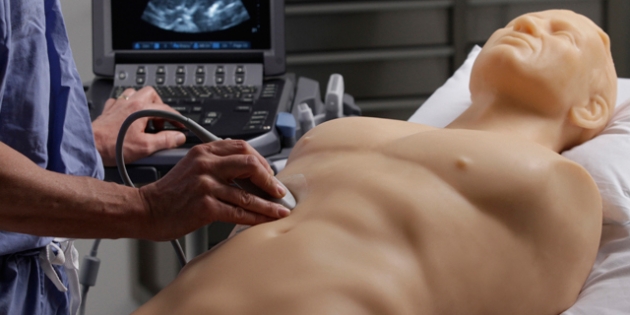
When it comes to training on specific procedural tasks and on particular ultrasound-guided skills, a trainer model (sometimes referred to as an ultrasound training block, a part task trainer, or an ultrasound training phantom) may be most appropriate. And, though the task of choosing the best device for training your learners is an important undertaking, it does not have to be a monumental one.
CAE Healthcare offers the following practical guidelines to aid in your decision-making and to help you arrive at the best choice for your specific ultrasound simulation training needs.
This list is not exhaustive. So, if you still have questions, please feel free to contact us and we'll assist you in finding the most reliable, realistic and reputable ultrasound trainers to achieve your training goals.
- Consider equipment that best suits your specific ultrasound training objectives.
For example: ultrasound guided needle procedures, anatomical structure recognition, procedural training, hand-eye dexterity
See a selection of ultrasound training blocks here
2. Based on your anticipated uses, think about additional features your ultrasound training model may require.
For example: cardiac doppler, vascular doppler; curved/linear and/or phased array transducer; stress echo, etc.
3. Consider ultrasound trainers that offer the most realistic experience available.
Realism enhances simulation training. Therefore, for the benefit of your learners (and the patients they will someday treat), you’d do well to accept nothing less than ultrasound trainer models that are professionally designed to image like real tissue, cannulate like real tissue and provide users with the opportunity to gain valuable proficiency through hands-on training on convincingly lifelike models.
View a selection of realistic training phantoms here
4. Decide which is most important: Cost, or product value.
In the long term, it might make more fiscal sense to obtain ultrasound trainers that meet the highest standards for quality in manufacturing, design, reliability and durability, rather than focusing on sticker price alone.
For example: Blue Phantom ultrasound trainers are constructed with patented, ultra-durable self-healing tissue to not only deliver realistic imaging characteristics, but to also provide users with a low cost of ownership that may actually save money. Users may practice ultrasound-guided techniques on a Blue Phantom procedural product repeatedly, without causing permanent damage, thereby reducing the necessity to purchase replacement parts.
Read more about ultrasound simulation training. Contact CAE Healthcare for additional information on meeting your simulation-based education needs.
Subscribe to the CAE Healthcare Blog for more updates like this