 Worldwide Presence

3 Convincing Arguments for Maternal Fetal Simulation Training
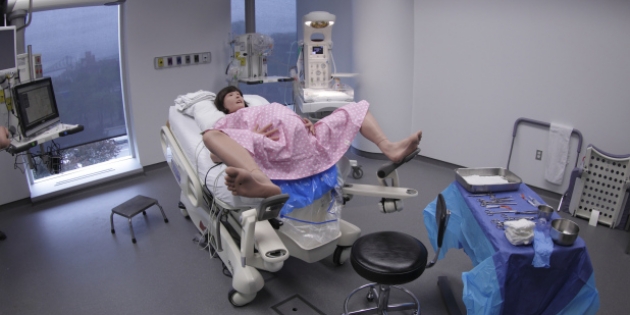
"...simulation has the potential to positively impact education, quality of care, and patient safety..." *
Human error. Ineffective communication.
Among preventable factors which may contribute to negative outcomes in maternal-fetal medicine, these two are at the top of the list.
In order to help minimize the impact of adverse events, and increase the likelihood of more positive results, it is essential for maternity care providers to receive expert training and practice in technical, procedural and teamwork skills - well before they manage the healthcare of actual patients.
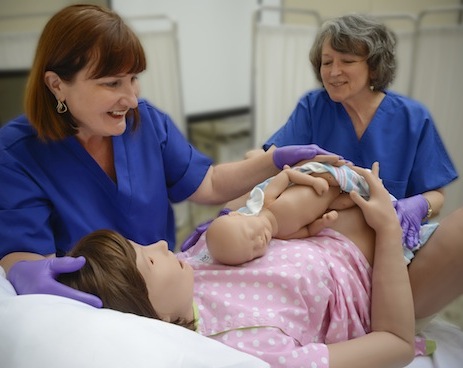
Simulation-based training offers this kind of preparation. By providing trainees in obstetrics and maternal-fetal medicine with realistic and risk-free learning opportunities, maternal fetal simulation has proven to be an invaluable adjunct to clinical training.
Excerpts from just a few of the most convincing arguments for simulation training in maternal and obstetric medicine (culled from evidence-based research and peer-reviewed studies), are provided below. These statements are offered for your consideration.
Visit the Fidelis Lucina Website Here
Maternal-Fetal Medicine & Simulation Training: Making the Case
1. "Training in safe operative birth is a key priority in obstetrics. Around one in five women are dissatisfied with their labor and birth, especially operative birth, often because of poor communication or inadequate technical skills … Simulation in obstetrics allows training and practice in a safe environment and can improve the performance of individuals and obstetric teams. There is overwhelming evidence that simulated practice leads to improvement for obstetricians in both their technical and communication skills. …”
December 2013, Cambridge University Press; ROBuST: RCOG Operative Birth Simulation Training
2. "The teams taught using simulation only were the only group to demonstrate sustained improvement in clinical management of the case, confidence, communication skills, and knowledge. The simulated based teaching group reported transferable skills and less anxiety in subsequent emergencies. Simulation based training is an appropriate proactive approach to reducing errors and risk in obstetrics, improving teamwork and communication, whilst giving the student a multiplicity of transferable skills to improve their performance."
November 2007, Nurse Education Today; Obstetric Skills Drills: Evaluation of Teaching Methods
3. Offering what we can only say is one of the best arguments for the usefulness of maternal fetal simulation training, we leave you with this statement, from Dr. Diogo Ayres de Campos, perinatal obstetrician, professor of Medicine at the University of Porto. Council member of the European Board and College of Obstetrics and Gynecology, and Coordinator for Obstetric Simulation at the Portuguese College of Obstetrics and Gynecology, Dr. de Campos was the lead developer of physiology for the CAE Fidelis Lucina Maternal Fetal Simulator:
"There have been enormous improvements in perinatal care affecting both maternal and perinatal mortality over the last 100 years. However, to achieve further reductions in these indicators, one needs to address the very rare complications, not only in terms of diagnosis but also in anticipation and appropriate treatment. Simulation is the only way of achieving and maintaining competence in the management of such rare situations."
Do you agree that maternal fetal simulation training might help to reinforce competency in technical skills and cross-team communications, and that such training help to improve outcomes and patient safety?
Contact CAE Healthcare to explore the many benefits of simulation-based education for maternal fetal medical care. Find out how our training courseware, patient simulators and learning solutions contribute to improving patient outcomes.
View our fully-updated and interactive Product Catalog !
Already a Lucina owner? Click to visit Konsiderate.com, and leave your own user review.
Subscribe to the CAE Healthcare Blog & Receive Automatic Updates



Sources:
*Goffman D. Introduction: The evolving role of simulation in maternal–fetal medicine. Seminars in Perinatology, Jun 2013
Attilakos G, et.al. ROBuST: RCOG Operative Birth Simulation Training. Cambridge University Press, Dec 2013
Birch L, et.al. Obstetric skills drills: evaluation of teaching methods. Nurse Education Today, Nov. 2007
Thanks for sharing. This is a fantastic article post.Thanks Again. Really Great.
It’s good to know how an obstetrics visit would work. My wife is pregnant now and she’s planning on going in for her first appointment.
We haven’t really selected an obstetrician yet, but I agree with you that it should be one that my wife feels comfortable with and that has ample experience. I also like what you said about fetal simulation training. That sounds like a helpful thing to have.